Fish Passage and Habitat Assessment (2025)
In the summer of 2025, salmon fry were observed in isolated pools in Knight Creek. This was concerning, as these fish were at risk of dying. Fish salvage occurred, and a study was conducted to review fish passage around BDAs in Knight Creek to follow-up on the work from 2024.
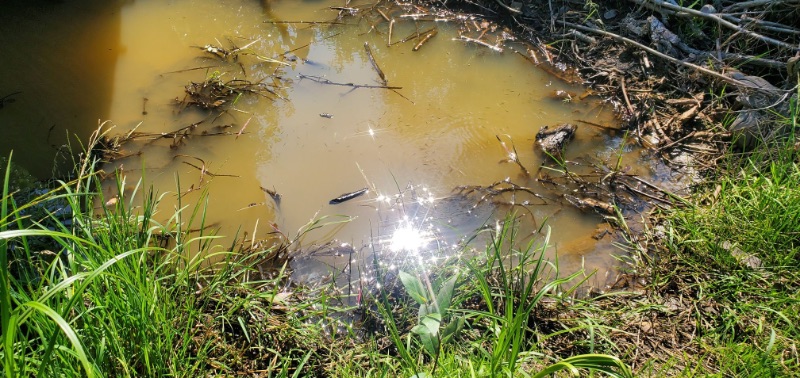
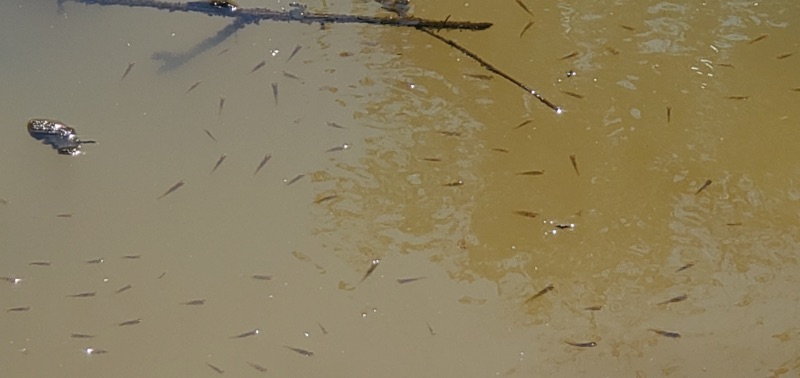
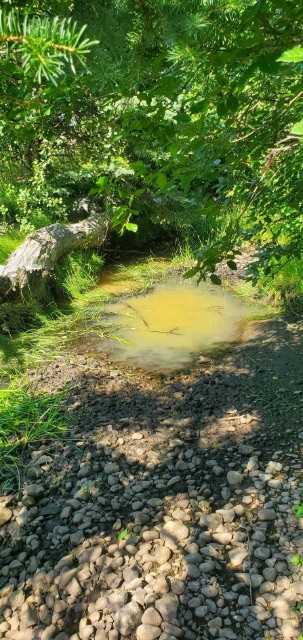
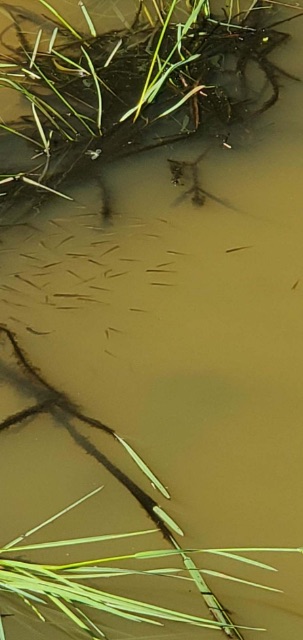
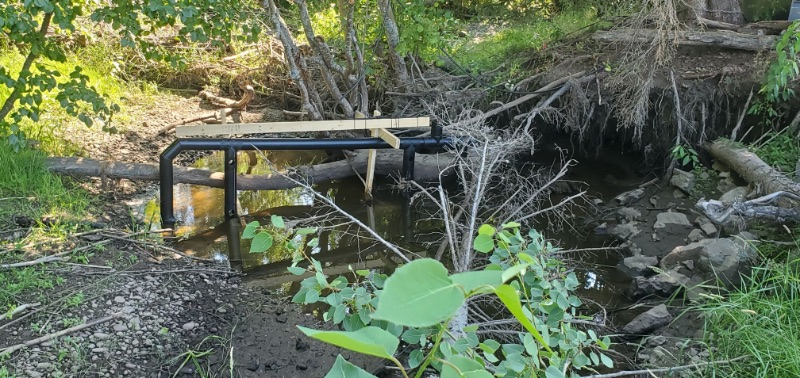
Fish Passage Study

This study took place in Clear and Knight Creeks, which are direct Nechako River tributaries that flow through the agricultural belt near Vanderhoof, BC. Clear and Knight Creeks meet the Nechako River approximately 14.3 river km upstream (i.e., northwest) and 8.8 river km downstream (i.e., east) of the Burrard Street Bridge in Vanderhoof, respectively. Clear Creek is spring-fed and flows year-round, so it served as the control stream for this study; whereas Knight Creek in its present state is heavily degraded, ephemeral, and subject to intensive restoration efforts by NEWSS, so it served as the test stream for this study. Presence of juvenile Chinook salmon was confirmed in both of these creeks via eDNA and minnow trapping prior to inception of this study.
Study results indicate that:
- Juvenile Chinook were present in non-natal tributaries from at least July through December, although most individuals present during summer dispersed to the Nechako River mainstem by late October.
- Upstream passage of juvenile Chinook at beaver dams appeared limited, and Chinook captured upstream of beaver dams were significantly larger than those found in unobstructed reaches downstream.
- An unanticipated result of this study was that fall dispersal timing of juvenile Chinook from non-natal tributaries may coincide poorly with Nechako River flow management, potentially increasing the risk of stranding due to tributary disconnection.
Read the full report here: Knight and Clear Creek Interim Report on BDA Fish Passage
This study ties together nicely the work of the Southern Endowment Fund to understand the influence of BDA’s & Post Assisted Log jams (PAL’s) on rebuilding secondary streams to the Nechako River with NEWSS's partnership with UNBC on e-DNA water analysis (now completed).
Read the monitoring update here: Clear Creek Chinook PIT Monitoring Update (05-2026)
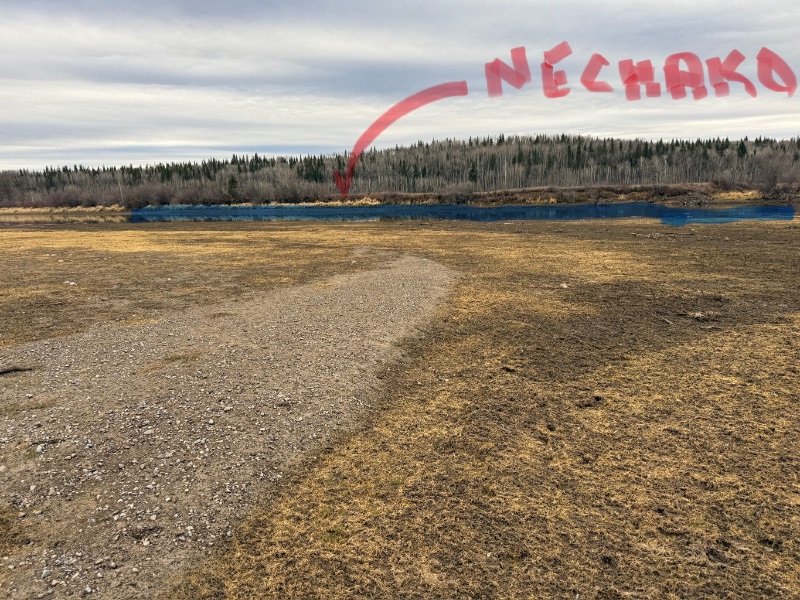
Tributary disconnection with the Nechako River
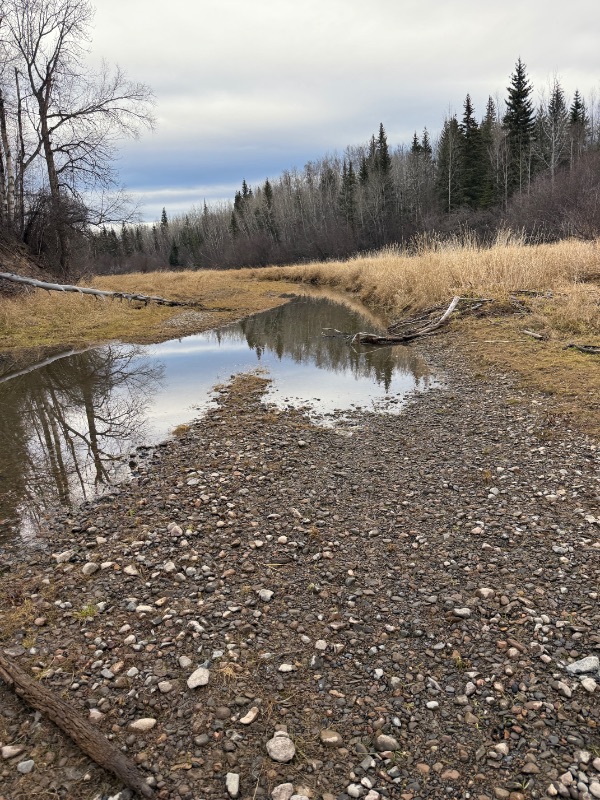
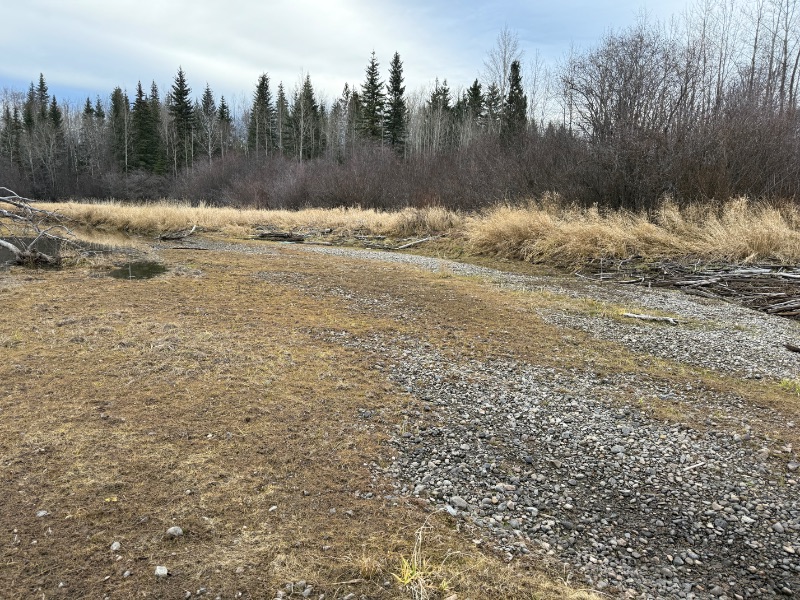
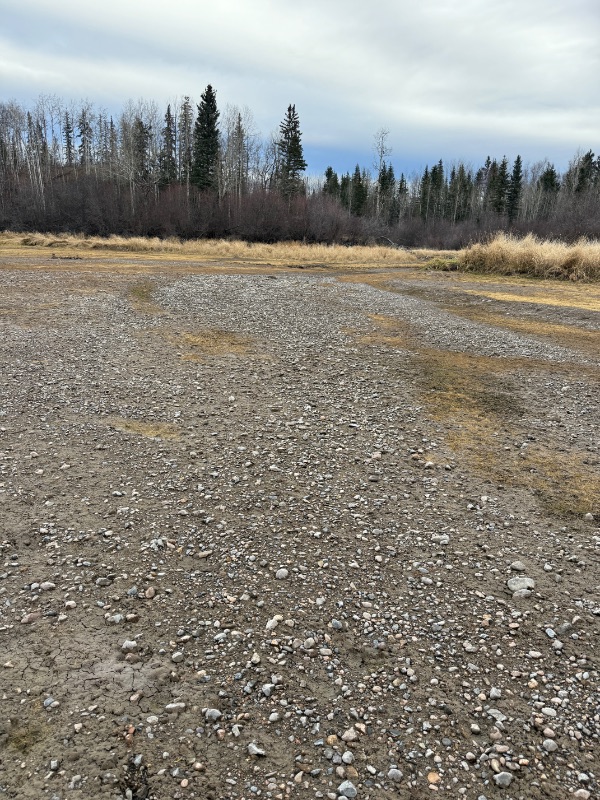
In November of 2025, observations confirmed that Knight Creek became completely disconnected from the Nechako River. Fall low water and sediment build up at the confluence were both factors in this disconnection. NEWSS was granted funding for a 3-year project to explore further this topic in the lower reach of Knight Creek.
Mark-recapture Monitoring
Monitoring of marked Chinook salmon continued into 2026. In August, 2026 the first double-recaptures at Clear Creek were recorded.